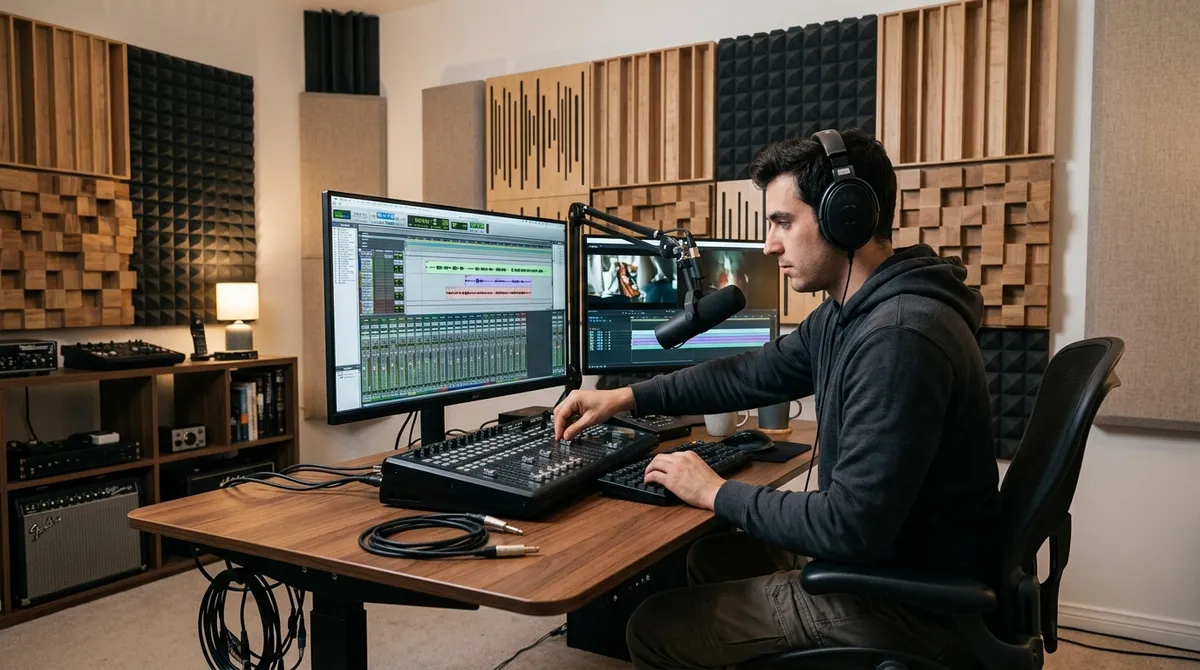
How Sound Designers and Audio Engineers Can Run an Audio Post-Production Client Approval Workflow Without Revision Chaos
Managing audio feedback across client emails, chat apps, and voice memos often leads to misplaced mix notes, vague timestamp requests, and painful revision disputes. This practical workflow guide outlines how freelance sound designers and audio post engineers can structure clear review milestones, collect precise waveform feedback without client login friction, and secure timestamped approval certificates that protect every completed mix.
Audio post-production thrives on exact timing, but client feedback rarely reflects that precision. Freelance sound designers, re-recording mixers, and audio engineers frequently receive notes like "bring down the whoosh around the middle" or "the dialogue feels slightly muffled somewhere in scene two." Deciphering those vague remarks across cluttered email chains or messaging threads drains productive studio hours and leads directly to revision fatigue.
When notes arrive without exact references, sound designers waste time hunting down moments across their digital audio workstations. Worse, when stakeholders deliver contradictory thoughts through separate emails, mixers get caught in the middle of conflicting subjective preferences. Establishing a dependable audio post-production client approval workflow prevents these headaches, protects project profitability, and creates an organized, professional review experience for everyone involved.
The Cost of Informal Audio Review Channels
Sharing rough mixes as raw email attachments, cloud storage download links, or generic streaming uploads creates multiple points of operational failure. Each unmanaged channel invites friction that disrupts the creative momentum of post-production.
- Vague Timestamps: Clients listening on mobile devices or standard desktop media players rarely note frame-accurate timestamps, forcing audio engineers to guess which foley pass, music transition, or dialogue stem needs adjustment.
- Account Creation Friction: Demanding that executive producers or brand managers register for complex enterprise proofing platforms causes immediate resistance and review delays.
- Fragmented Feedback: Notes scattered across emails, text messages, and project boards make it difficult to consolidate a unified punch list before opening a session.
- Unverified Approvals: A casual confirmation like "sounds good to me" sent in an informal chat message offers zero protection when a stakeholder requests major re-edits after final stems are delivered.
Eliminating these problems requires a dedicated review structure that removes technical barriers for the listener while capturing structured, actionable comments tied directly to the audio track.
Step 1: Enforce Picture Lock and Agree on Delivery Milestones
Uncontrolled revisions often originate before sound design even begins. If picture edits continue shifting while audio work is underway, audio cues fall out of sync and mix automation breaks down. Prior to accepting project files, establish a firm understanding that sound editing commences only after the video edit has achieved a confirmed picture lock.
Outline your review stages in advance. For most commercial, narrative, or branded content projects, a two-pass review structure keeps momentum steady:
- Pass One (Spotting and Structural Mix): Verification of voiceover leveling, dialogue clarity, principal foley, and initial music placement.
- Pass Two (Final Polish and Master): Detailed sound effects balancing, automation adjustments, spatial panning, and final loudness compliance.
Documenting these milestones ensures clients understand that structural changes belong in the first review, preventing eleventh-hour requests that require rebuilding complex audio sessions.
Step 2: Share a Single, Frictionless Audio Review Link
Clients are busy decision-makers who appreciate simplicity. If they must remember login passwords, download proprietary software, or navigate complicated interfaces, review turnaround slows down significantly.
Using a streamlined review platform like File Approved allows audio engineers to upload WAV or MP3 files and distribute a single, direct review link. Reviewers open the link on any desktop or mobile browser and listen immediately without registering for an account. By providing native playback controls and an audio scrubber with timestamp comments, clients can pause at any millisecond and enter notes directly on the waveform.
Instead of receiving vague emails referencing "that loud thud near the beginning," you receive exact markers such as "lower low-end rumble on the impact at 0:14." This clarity keeps your session edits fast, precise, and completely aligned with client expectations.
Step 3: Establish One Designated Decision-Maker
Audio feedback is inherently subjective. When multiple stakeholders provide disconnected impressions, the mix engineer often receives contradictory directions, such as a marketing manager requesting louder background music while a compliance lead asks for quieter background tracks to prioritize dialogue intelligibility.
Require your client to designate one single review lead who gathers internal feedback before submitting the revision request. When sharing your review link, instruct the project lead to consolidate internal stakeholder opinions into one coherent revision round. This single-point-of-contact rule eliminates conflicting notes and keeps project timelines on schedule.
In collaborative productions, creative partners often rely on structured review environments. For instance, when reviewing client video deliverables with production partners like Envy Creative, maintaining a consolidated review trail ensures animation, picture, and audio elements progress toward sign-off without duplicate or conflicting directives.
Step 4: Track Revision Iterations on a Unified Thread
Uploading successive mixes to different email threads or generating fresh download URLs leads to version confusion. Reviewers accidentally open earlier cuts, re-flag sound design issues that were already resolved, and waste valuable studio time.
Maintain version continuity by uploading new mix iterations directly to the existing review link. With clean versioning, clients can listen to the latest bounce, toggle between previous passes, and review inline revision notes side by side. Keeping the entire historical audit trail in one centralized location eliminates arguments over whether a specific dialogue clean-up pass was completed.
Step 5: Lock In Approvals with a Signed Paper Trail
The transition between client review and final stem delivery represents the most vulnerable stage for creative freelancers. Without formal sign-off documentation, clients frequently assume they can continue asking for minor balance tweaks, instrument volume shifts, or replacement sound effects long after final master delivery.
A modern file approval workflow provides a decisive conclusion. When the reviewer clicks approve, File Approved automatically generates an official Certificate of Approval. This document captures the exact file name, audio file format, timestamp, version number, and reviewer details.
Having a verifiable, professional paper trail gives freelancers complete peace of mind. It creates mutual accountability, establishes a clean boundary for out-of-scope requests, and ensures that any subsequent changes can be billed fairly as additional scope. Transitioning your studio to an account-free, timestamp-accurate approval workflow keeps your creative projects profitable, transparent, and completely free from revision chaos.